Cross-inspection consistency
I lead consistency reviews across international supervisory inspections, connecting individual findings with shared standards and a coherent supervisory view.
Professional profile
Banking supervision, teaching and applied research
Team Lead at the European Central Bank in Frankfurt am Main. I work on the consistency of international supervisory inspections, with a particular focus on credit risk and IFRS 9 expected credit loss models.
Banking supervision is the centre of my professional practice. My teaching and independent research share a focus on how financial risks are measured, how models are evaluated, and how evidence supports professional judgement.
Profile
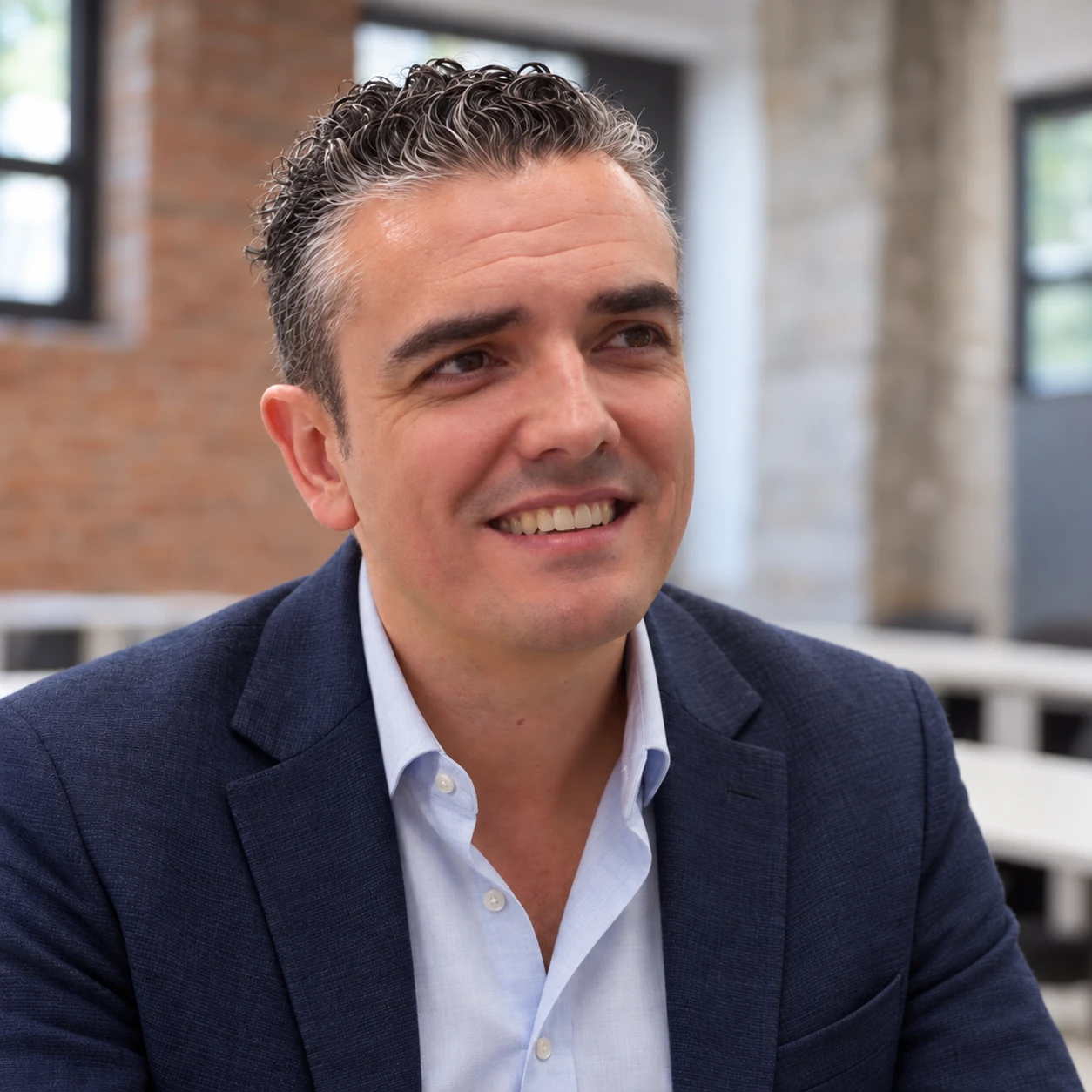
My career brings together supervisory judgement, quantitative analysis and first-hand banking experience. Across roles at the European Central Bank and Banco de España within the Single Supervisory Mechanism, I have worked on inspections, credit-risk assessment, supervisory methodology and the use of granular data to make complex portfolios more intelligible.
My independent research focuses on model risk: how specification choices affect predictive evidence, and how far that evidence supports a particular conclusion. I use reproducible empirical comparisons and controlled simulations to connect model evaluation with the interpretation of results. Teaching brings the same reasoning into the classroom.
Before joining public banking supervision, I spent fourteen years in private-sector banking and finance. That period covered branch management, mortgage lending, non-performing loan recovery and restructuring, and complex negotiations—experience that continues to inform how I read institutions, incentives and balance sheets.
In 2018, I placed seventh in the competitive selection process for thirty Banco de España Inspector positions.
CEF interview · Preparing for the examination alongside work and family responsibilities01 · Primary practice
My core work is the consistent and evidence-based assessment of banking risks across the European supervisory framework.
I lead consistency reviews across international supervisory inspections, connecting individual findings with shared standards and a coherent supervisory view.
My main technical focus is credit risk, including expected credit loss models, portfolio evidence and the assumptions that shape provisioning outcomes.
I serve as Head of Mission on selected assignments, bringing together technical depth, clear communication and proportionate supervisory judgement.
My work also includes supervisory methodology, granular portfolio analysis and the practical use of natural-language processing and other SupTech approaches.
Selected SupTech contribution
At Banco de España, I developed a text-mining approach to support risk-based credit-file sampling. The resulting tool analysed unstructured information in credit files to identify exposures potentially misclassified as performing and bring them forward for supervisory review.
The initiative was subsequently referenced by the BIS Financial Stability Institute as “the Bank of Spain’s text mining for wiser sampling” in FSI Insights No 37, Suptech Tools for Prudential Supervision and Their Use During the Pandemic (2021).
External reference · BIS FSI Insights No 37Training and knowledge transfer have been a recurring part of my work at both Banco de España and the European Central Bank. I have designed, organised and delivered training for inspectors and banking supervisors from across the Single Supervisory Mechanism and ASBA member authorities in the Americas. Topics have included machine learning applied to banking supervision, data analysis with R and Python, and AI-assisted approaches to supervisory analysis.
02 · Teaching
My teaching connects economic reasoning with practical data analysis: defining the question, examining assumptions, testing alternatives and explaining what the evidence supports. It is built around structured intuition and clear explanation. It also reflects a personal continuity: I later taught at Universidad Carlos III de Madrid, where I earned my degree, and I now teach at Centro de Estudios Financieros (CEF), where I prepared for the Banco de España competitive examination. The same commitment to knowledge transfer informs the training I deliver in banking supervision.
I teach Financial Mathematics, Statistics, Econometrics and Applied Quantitative Methods in programmes preparing candidates for Banco de España Inspector examinations.
I taught Econometrics, International Trade and Derivatives, including bilingual groups. My teaching received formal commendations following student evaluations in 2019 and 2020.
UC3M alumni interview · Mentoring and returning experience to the university community03 · Independent research
My research examines how model specifications shape empirical findings and the conclusions we draw from them. This interest grows out of my professional work on credit risk, model assessment and supervisory judgement.
Explore the researchSpecification choices
Benchmarks, transformations and evaluation procedures shape what a model appears to add. I study how reasonable alternatives change the evidence, even when researchers use the same data and act in good faith.
Interpreting the evidence
A predictive gain is conditional on its comparison. A failure to detect a gain also needs interpretation. My focus is on making that connection between a result and its justified claim explicit and open to scrutiny.
How can two competent researchers reach different conclusions from the same data? An application using news indicators and bond yields, together with controlled simulations, examines the role of specification choices and the scope of both positive and negative findings.
Selected education
Universidad Nebrija · 66 ECTS · Highest distinction, 10/10
CEMFI and Banco de España
Universidad Carlos III de Madrid
Contact
Please use the address closest to the subject of your message.